
Most drivers do not look at their tires until something goes wrong. By then it is usually too late, you are buying tires you did not plan for or driving on something dangerous. This guide covers the three things every driver should know: how to find your tire size, how to check tread depth, and why alignment is non-negotiable when you buy new tires.
Where to Find Your Tire Size
You have two reliable places to find your factory-recommended tire size. Both are accurate, but they tell you slightly different things.
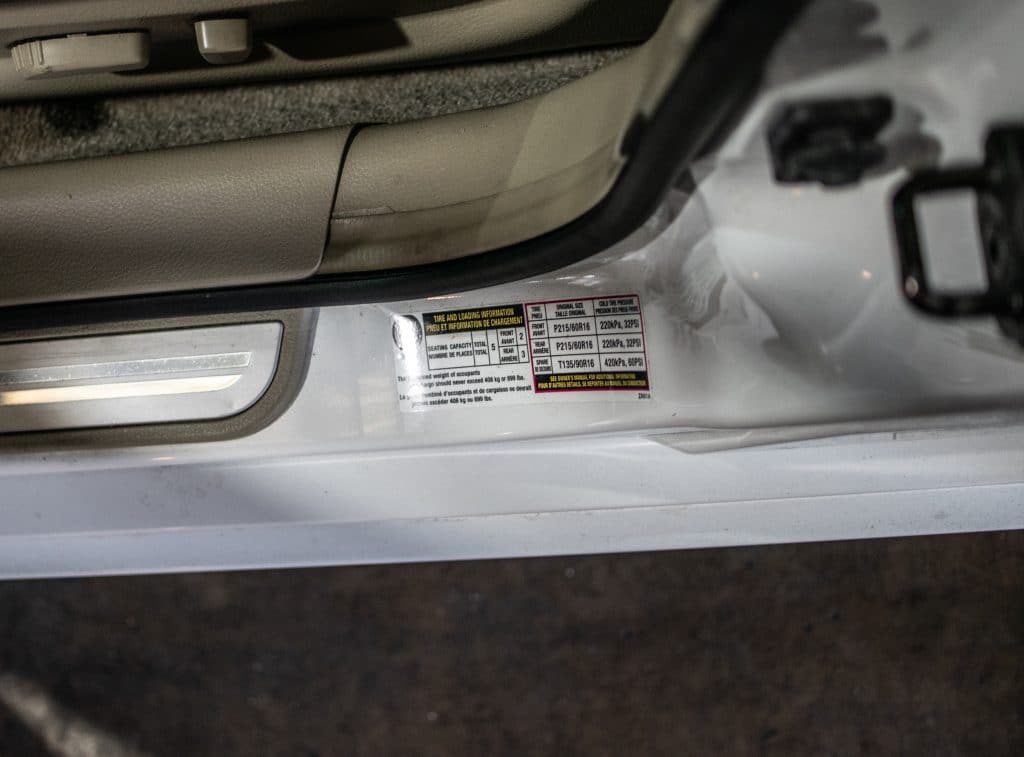
Option 1: The Driver Door Jamb Sticker
Open the driver's door and look at the door frame (the metal pillar the door latches onto). You will see a white or yellow sticker with information about your car. It lists the recommended tire size and the correct tire pressure straight from the manufacturer. This is what your car was built for.
Option 2: The Sidewall of Your Current Tire
Look at the outside wall of any tire on your car. You will see a code that looks like this:
P205/55R16 91V
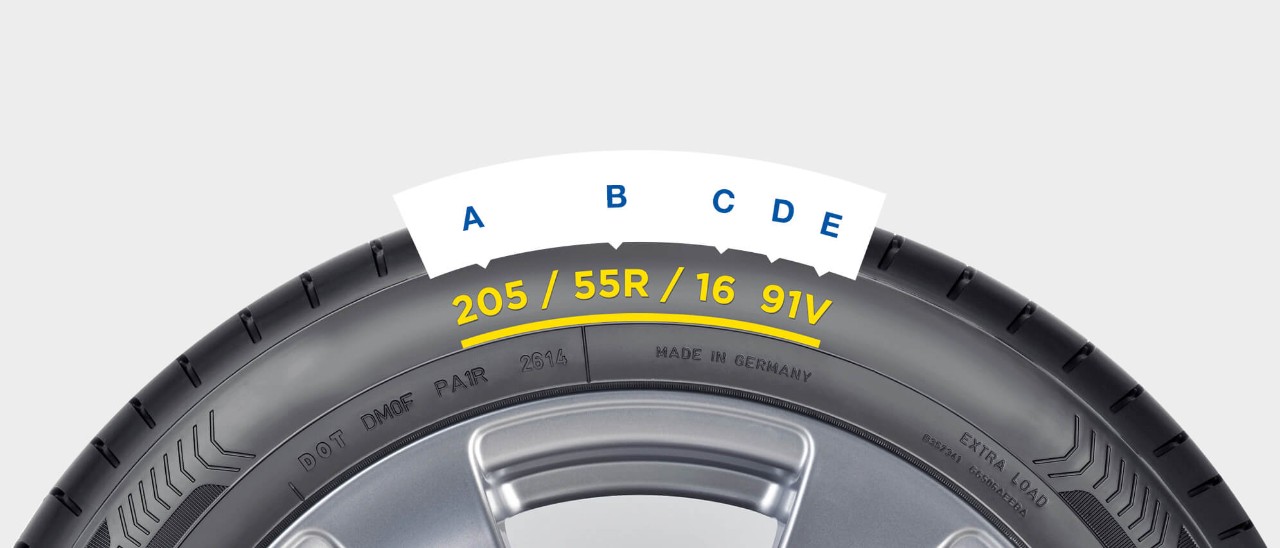
Here is what each piece means:
- P — Passenger vehicle (you may see LT for light truck, or no letter at all).
- 205 — Width of the tire in millimeters, from one sidewall to the other.
- 55 — Aspect ratio. The sidewall height is 55 percent of the width. Lower numbers mean shorter sidewalls and a sportier look.
- R — Radial construction (almost every modern tire).
- 16 — Wheel diameter in inches. This tire fits a 16-inch wheel.
- 91 — Load index. How much weight one tire can carry.
- V — Speed rating. V is rated to 149 mph.
If the size on your sidewall does not match the door jamb sticker, someone changed the tire size at some point. That can affect speedometer accuracy, ride quality, and even ABS. When in doubt, go with the door jamb.
How to Check Tread Depth
Tread is what gives your tires grip, especially in rain and snow. As tread wears down, your stopping distance gets longer and your risk of hydroplaning goes up sharply. Here are three quick ways to check.
The Penny Test (the bare minimum)
Take a penny and stick it head-first into the tread groove. If you can see all of Lincoln's head, your tread depth is at or below 2/32 inch. That is the legal minimum in most states and what the industry calls "bald." Replace the tire immediately.
The Quarter Test (the smarter test)
Do the same thing with a quarter, head down. If you can see all of Washington's head, you are at or below 4/32 inch. This is where wet-weather performance falls off a cliff. Start shopping for tires now, do not wait until they are bald.
The Tread Depth Gauge ($5 at any auto parts store)
This is what shops use. Push the probe into the deepest part of the groove and read the number. New tires usually start at 10/32 or 11/32 inch. Anything below 4/32 means you should be replacing soon, 2/32 means replace now.
What "Bald at 2/32" Actually Means
The legal minimum tread depth in 42 US states is 2/32 inch. At that depth, your tire is considered worn out and unsafe. Here is why that number matters:
- At 2/32 inch, your wet-weather stopping distance from 60 mph nearly doubles compared to a new tire.
- Hydroplaning risk increases dramatically because the tread can no longer channel water out from under the tire.
- You can fail state inspections, get pulled over, and your insurance can deny claims if a bald tire contributed to an accident.
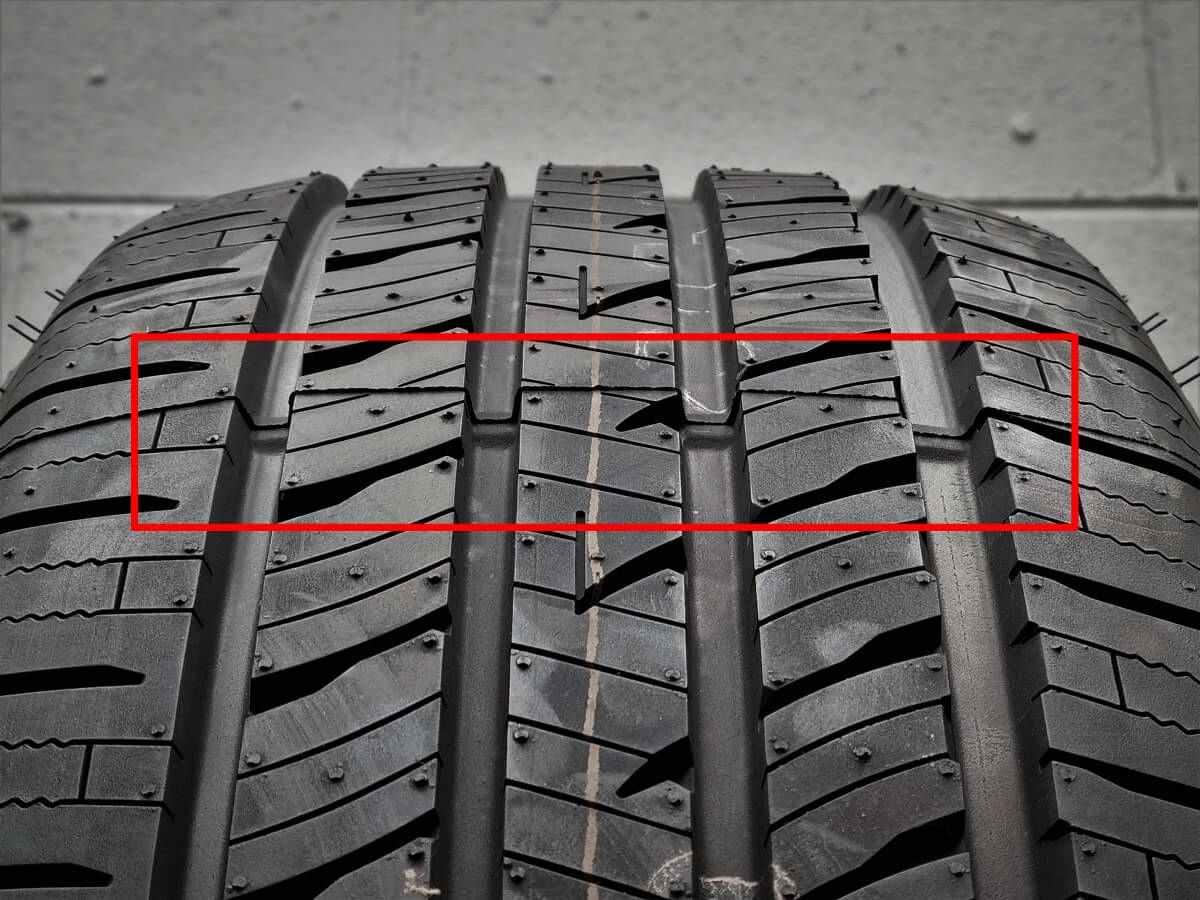
Tires also have wear bars built in. These are small raised rubber bars across the tread grooves. When the tread surface is flush with the wear bars, you are at 2/32. No measuring required, the tire is telling you it is done.
Why You Need an Alignment with New Tires
This is the part most shops gloss over because they do not want to upsell you. But it is the single most important thing for tire life.
Wheel alignment refers to the angles of your wheels relative to the road and each other. There are three main angles: camber (tilt in or out), toe (pointing in or out), and caster (forward or backward tilt of the steering axis). When any of these are off, your tires do not roll straight, they scrub sideways against the pavement as you drive.
How a Bad Alignment Destroys New Tires
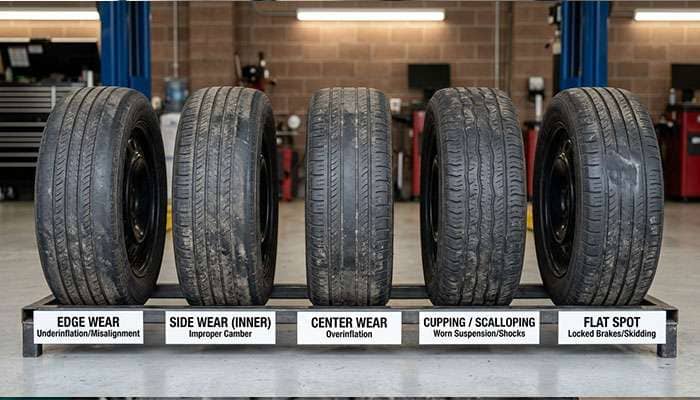
If your alignment is off when you put new tires on, here is what happens:
- 1,000 to 3,000 miles in: You start to see uneven wear. The inside or outside edge of the tire wears faster than the rest.
- 5,000 to 8,000 miles in: Steel belts can start showing through the rubber on the worn edge. The tire is now permanently ruined.
- 10,000 miles in: A set of tires that should have lasted 50,000 to 60,000 miles is done. You are buying new tires twice as often as you should.
This is not theoretical. A toe angle that is off by half a degree (basically invisible to your eye) can wear a set of tires down to the cords in under 10,000 miles.
Why Tires and Alignment Always Go Together
Three reasons every reputable shop recommends an alignment with every tire replacement:
- Your old tires hid the misalignment. If your alignment was off, your old tires wore unevenly. Once you put new tires on, those uneven tires are gone but the misalignment is still there. The new tires start wearing wrong from day one.
- Hitting curbs and potholes knocks alignment out. Every time you smack a pothole or bump a curb during parking, your alignment shifts slightly. After a few years of driving, it is almost certainly off by some amount.
- Suspension wear changes the angles. Worn ball joints, bushings, and control arms gradually shift the wheel angles. Replacing tires is the natural time to check and correct.
What an Alignment Costs
A four-wheel alignment usually costs $80 to $200. A set of tires costs $400 to $1,600. Skipping the $120 alignment to save money can cost you a $1,000+ set of tires in a year. The math is brutal.
When You Can Skip the Alignment
Almost never. The only legitimate reason to skip is if your old tires showed perfectly even wear across the entire tread surface and you have not hit any curbs or potholes in the last year. A good shop will measure the alignment before doing it and only charge if it is actually out of spec.
Quick Checklist for New Tires
- Confirm the size from the door jamb sticker, not just your old tire.
- Match the speed rating and load index to your car (or higher).
- Always get a four-wheel alignment with new tires unless your old wear pattern was perfectly even.
- Set tire pressure to the door jamb spec, not the maximum on the sidewall.
- Schedule rotation every 5,000 to 7,500 miles to even out wear.
- Recheck alignment every 12,000 miles or after any hard pothole hit.
Get an Estimate Before You Buy
Tire and alignment quotes vary wildly between shops. The exact same set of tires can be $700 at one place and $1,100 at another. Get a free AI estimate for tire replacement and alignment on your exact car so you know what is fair before you walk into the shop.